






Faculty - Environmental Science
Dr. Thomas A. Betts
Professor
Chemistry
610-683-4444
Boehm Science Building Rm 318
As an analytical chemist, I try to answer environmental questions by finding what chemicals are in a sample and how much of each is there. For example, are pesticides that are intended to kill spotted lantern flies finding their way into bee hives? Working as a team with a biologist and undergraduate students we used sophisticated techniques capable of detecting tiny amounts of pesticides in bees, wax, and honey. Fortunately, we found no detectable pesticide in any of these samples. So, no, these lantern fly pesticides did not end up in bee hives in our study. At KU we have access to many powerful techniques to determine identities and concentrations of sample components which can be used to answer diverse questions about our environment.
I am a physical geographer and atmospheric scientist. My interests include meteorology, climatology, climate change, weather forecasting, climate modeling, and land-sea-air interactions. I am also interested in geography education through gaming.
I am an ecologist. I teach upper-level courses in research methods, ecology, conservation biology, and population & community ecology. My interests include plant-herbivore interactions, the impact of invasive species on communities and ecosystems, and the consequence of ecological interactions on carbon cycling and storage. I am also keenly interested in the quantitative synthesis of research questions (i.e., meta-analysis), experimental design, and statistical procedures for multivariate response variables. Outside of science, I enjoy backpacking, audiophilia, French cooking, and houseplants (Ask me about my houseplants…).
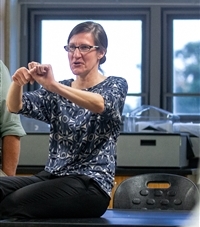

As and Earth System Scientist, I am fascinated by the layers of connection between everything on our planet, including us. As a consequence of those connections, human influence shapes the Earth physically and functionally. While humanity’s influence on the planet is somewhat inevitable, the type of influence is not. We, as rational, thinking beings, can choose the outcome and define our relationship with Earth. The challenge is to identify choices that lead to the outcomes we want. For me, Environmental Science is all about studying ways that we can sustain our society and simultaneously support the planetary systems that provide that sustenance.