





This session reframes counselor education delivery methods by shifting the focus from where learning occurs (in-person vs. online) to how instruction is intentionally designed. Rather than treating modalities as one-size-fits-all, the presentation explores instructional approaches along a continuum—including experiential, synchronous, asynchronous, hybrid, and simulation-based learning—and examines how each supports specific counselor development outcomes. Participants will be encouraged to think critically about aligning instructional design with learner needs, educational contexts, and desired outcomes, and to apply this perspective to teaching practice and scholarship of teaching and learning research in counselor education.
Counselor Education Innovations Conference
The Counselor Education Innovations (CEI) Conference—formerly CEDL—brings together counselor educators, practitioners, administrators, and distance learning professionals to share research, best practices, and innovative strategies. The 2026 theme, “Connecting Practice, Research, and Technology in Counselor Education,” emphasizes how scholarship, applied practice, and emerging technologies are shaping the future of counselor education.
Attendees joined us virtually on February 13, 2026, from 9:30 AM–5:30 PM for sessions exploring innovation, ethics, and evolving best practices in counseling and counselor education.
SAVE THE DATE: Mark your calendar for CEI 2027, taking place virtually on February 12, 2027! Join the mailing list to recieve updates.
2026 Keynote: Intersection of Mental Health and Technology
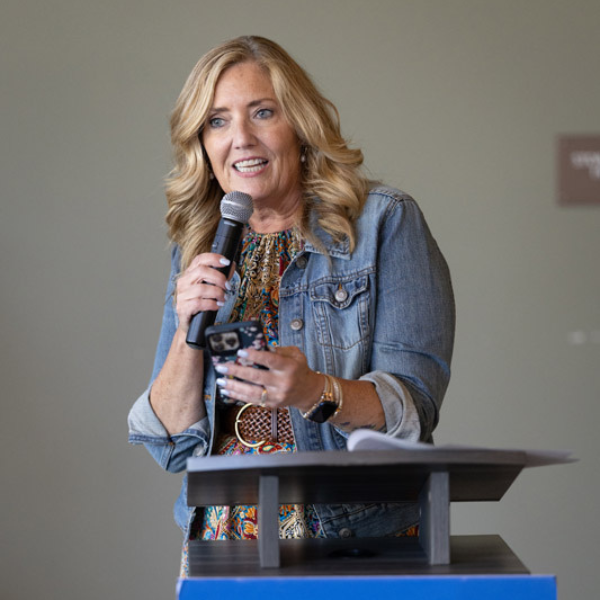
Donna Sheperis, PhD, LPC, NCC, CCMHC, ACS, BC-TMH
Dr. Donna Sheperis is a Professor of Counseling at Palo Alto University with over 30 years of clinical experience. A Licensed Professional Counselor and National Certified Counselor, she is a past president of the Association for Assessment and Research in Counseling and serves on the ACA Ethics Appeals Committee. She has authored numerous publications, including Ethical Decision Making for 21st Century Counselors (2024) and Clinical Mental Health Counseling: Fundamentals of Applied Practice (2025).
-
Why Attend CEI: Conference Highlights & Benefits
CEI is designed to be a meaningful, engaging experience that supports your professional growth, learning, and connection - all in a flexible, virtual format.
🧠 Advance licensure & professional credentials with CE credit hours, while learning from leaders in counselor education and online learning through engaging keynote addresses.
🎓 Deepen your learning beyond the conference with three months of Coursera access, included with registration at no additional cost. Explore thousands of self-paced courses and professional certificate programs through KU Advance’s partnership with Coursera.
💻 Learn from anywhere with a 100% virtual experience featuring concurrent sessions and interactive workshops that highlight practical strategies, research insights, and scholarly dialogue.
🚀 Walk away with real value - practical tools you can apply immediately, fresh perspectives, and meaningful professional connections through built-in networking opportunities designed to foster collaboration.
-
Who Should Attend
- Counselor Educators
- Distance Learning Specialists
- Graduate Students
- School and Clinical Counselors
- Higher Education Administrator
- Researchers and Policy Leaders
Be part of the conversation—follow us on LinkedIn for the latest updates.
-
Registration Fees
Join us for the Counselor Education Innovations (CEI) Virtual Conference 2027.
Professional and paid student rates will be available closer to the conference date.
Students may attend for free! If you are a student who does not need continuing education (CE) credits, please register using your student email address and enter the code STUDENT in the discount box at checkout before completing your registration.
The professional and student registration fees reflect the cost of providing continuing education credits (CEs) and the added benefit of a 3-month Coursera subscription.
-
Important Dates
- Proposal Submission Deadline: TBD
- Notification of Acceptance: TBD
- Conference Date: February 12, 2027
Virtual Event, Hosted by KU Advance
-
Call for Presenter Proposals
Proposals are now closed for the 2026 CEI conference. Please refer back to this page for updates on next year's conference and presentation opportunities.
-
Sponsorship Opportunities
Support our mission and connect with our community through one of our sponsorship tiers: Innovator, Leader, Supporter, or a fully customizable You Decide option. Visit our sponsorship tiers page for details, and apply through our sponsorship form when you’re ready to partner with us.


Join our CEI LinkedIn group for updates on the conference, speaker highlights and topics, and a sneak peak into what to expect day-of!
Explore 2026 Sessions & Speakers
-
Digital Delivery with Confidence
Presenters: Nicole Arcuri-Sanders, Ph.D., ACS, LPC-S, LCMHC-S, LPC, BC-TMH, NCC, SAC and Alisha Davis, PhD, LCMHC-S, LMHC
Affiliation: Coastal Carolina UniversitySession Summary
This session examines digital delivery (DD) as a permanent and essential modality within counselor education, supervision, and clinical practice. Drawing on professional guidelines, research trends, and pedagogical principles, the session highlights ethical, legal, and instructional considerations, including confidentiality, accessibility, informed consent, supervision, and competence-based assessment. Participants will gain practical tools and evidence-informed strategies to implement and evaluate digital delivery with clarity, consistency, and confidence across educational, supervisory, and clinical settings.
Presenter Bios
Dr. Nicole Arcuri-Sanders is a counselor educator, licensed clinician, and supervisor with extensive experience in digital delivery, telehealth, and curriculum development. She has published and presented widely and is committed to preparing counselors for evolving professional demands through ethical, client-centered training.
Dr. Ali Davis is a clinician, counselor educator, and supervisor. A leader in telehealth since 2016, she integrates technology with trauma-informed care and is dedicated to expanding access to quality mental health services through research, teaching, and advocacy.
-
The Future of Counselor Education: Moving Beyond Delivery Methods Toward Outcomes and Human Impact
Presenter: Eric Beeson, PhD, LPC/LCMHC
Affiliation: Marshall UniversitySession Summary
Presenter Bio
Dr. Eric T. Beeson (he/him) is Professor and Chair of the Counseling Department at Marshall University and a strategic adviser to SimCareAI, where he helps guide the platform’s ethically grounded use of artificial intelligence in mental health professional training. Over nearly two decades, Eric has woven together clinical practice, teaching, and research across residential youth treatment, community mental-health and substance-use programs, collegiate recovery initiatives, private practice, and neurofeedback clinics.
-
Integrating Conversation-Based AI into Counselor Education and Clinical Skills Training
Presenter: Carlos Castañeda, PhD, LPC, NCC
Affiliation: St. Edward’s UniversitySession Summary
This session explores how conversation-based artificial intelligence (AI) is reshaping counseling practice, counselor education, and clinical skills training. Participants will examine current applications of conversational AI in supervision, skills development, assessment-adjacent tasks, and client-facing supports, alongside the ethical, legal, and cultural considerations these technologies introduce. Grounded in interdisciplinary research and professional guidance from the ACA and NBCC, the session emphasizes responsible integration of AI, highlighting both its potential and limitations. Attendees will leave with practical strategies for using AI as a supportive educational and clinical tool while preserving ethical practice, professional boundaries, and the therapeutic relationship.
Presenter Bio
Dr. Carlos Castañeda is a licensed professional counselor, researcher, and founder of ThinkAITA LLC, which creates AI and digital tools for healthcare, education, and public safety. He is an Assistant Professor at St. Edward’s University, focusing on autism, digital mental health, and youth well-being. He presents nationally, publishes on counseling and technology, and promotes equitable, innovative approaches to integrating digital tools into clinical care and training.
-
Trauma Informed Counselor Education Practices : Preparing the Next Generation of Trauma Therapists
Presenters: Laura Dawson-Fend, PhD, LPC, CADC, NCC, Yoon Suh Moh, PhD, LPC, NCC, CRC, BC-TMH, BCN, Shernell Elibox, PhD, LPC, NCC and Triana Martinez, PhD, LPC, NCC
Affiliation: Thomas Jefferson UniversitySession Summary
This presentation highlights Thomas Jefferson University’s Community and Trauma Counseling (CTC) program and its trauma-informed, healing-centered approach to counselor education. Grounded in Sandra Bloom’s Sanctuary Model and aligned with CACREP standards, CTC integrates trauma education throughout the master’s curriculum rather than confining it to a single course. Students are prepared to work with vulnerable populations through innovative learning experiences, including AI-enhanced training and interprofessional simulations. The session will share CTC’s program design, faculty collaboration model, and lessons learned, offering practical insights for integrating trauma-informed practices across counseling curricula to better prepare future clinicians.
Presenter Bios
Dr. Laura Dawson-Fend is a counselor educator and addictions concentration coordinator in the Community and Trauma Counseling Program at Thomas Jefferson University. Laura has a passion for working with individuals who have experienced trauma specializing in sexual trauma and/or human trafficking. Laura has worked both in the university setting as a professor and in clinical mental health settings working with those having challenges with substance use disorder, severe and persistent mental illness or in the middle of a crisis episode.
Dr. Yoon Suh Moh is an associate professor and the assistant director of the community and trauma counseling program at Thomas Jefferson University. She is a licensed professional counselor, certified rehabilitation counselor, nationally certified counselor, board certified telemental health provider, and Biofeedback Certification for International Alliance’s board-certified counselor in EEG neurofeedback with professional proficiency in English, Japanese, and Korean.
Dr. Shernell Elibox is an Afro-Caribbean clinical mental health counselor and Assistant Professor and Clinical Coordinator of the Community and Trauma Counseling Program at Thomas Jefferson University. She earned her PhD in Counselor Education from The Pennsylvania State University in 2023 and previously served as the first Clinical Suicidologist Counsellor in Saint Lucia, where she helped design and implement national mental health and suicide prevention initiatives. Her research focuses on intersectionality, suicidality, and cultural humility in suicide prevention, including a large-scale study of college students of color.
Dr. Tiana Martinez is a licensed professional counselor and counselor educator whose work focuses on multicultural counseling, ethnic identity development, and the role of community in education. Their scholarship includes publications in the Journal of Humanistic Counseling and Professional School Counseling, with research exploring decolonizing academy, cultural identity, and group counseling practices. An active member of the American Counseling Association and ASERVIC, Martinez has presented nationally on topics including adoption, spirituality and values in counseling, and school-to-work transitions, and has led trainings on multicultural competence, microaggressions, and counseling skills in higher education settings.
-
Behavioral Addictions Training: A New Imperative for Counselor Education
Presenter: Amanda Giordano, PhD, LPC
Affiliation: University of GeorgiaSession Summary
This session addresses the growing prevalence of behavioral and digital media addictions - including gaming, gambling, social media, and compulsive online behaviors - and their impact across the lifespan. Grounded in current research and public health findings, the presentation examines how counselors-in-training can effectively conceptualize, assess, and respond to behavioral addictions using a biopsychosocial framework. Emphasis is placed on distinguishing high engagement from addiction, understanding the neurobiology of addiction, and applying empirically supported interventions such as Motivational Interviewing. Participants will gain practical guidance on screening tools, assessment strategies, and prevention approaches essential for contemporary counselor education and clinical practice.
Presenter Bio
Dr. Amanda L. Giordano is an associate professor at the University of Georgia who specializes in addictions counseling. She is the sole author of a clinical reference book titled, A Clinical Guide to Treating Behavioral Addictions and co-author of a textbook titled, Addiction Counseling: A Practical Approach. She was awarded the Garry R. Waltz Trailblazer Award from the American Counseling Association in recognition of her work with behavioral addictions. Dr. Giordano collaborates with domestic and international organizations to provide trainings related to addictions counseling.
-
Residency Reimagined: Designing Immersive Experiences for Online Counseling Students
Presenters: Rachel Jacoby, Ph.D., LPCC-S, NCC, ACS, Kelly Coker, PhD, NCC, BC-TMH, LCMHC, LaToya Smith, PhD, LPC, and Margaret Lamar, PhD, LPC/LPCC
Affiliation: Palo Alto UniversitySession Summary
This session examines residency experiences as a cornerstone of counselor preparation within online counseling programs. Drawing on constructivist and experiential learning theories and aligned with CACREP standards, the presentation explores innovative strategies for designing, implementing, and assessing residency models that foster professional identity development, clinical competence, and student connection. Grounded in research and multi-year program evaluation data, the session highlights best practices and lessons learned for creating immersive, face-to-face residency experiences that enhance engagement, multicultural competence, and readiness for practicum and internship in virtual counselor education settings.
Presenter Bios
Dr. Rachel Jacoby is an LPCC-S assistant professor at Palo Alto University whose work focuses on children, families, trauma-informed care, and curriculum development.
Dr. Kelly Coker, professor and Faculty Senate Chair at Palo Alto University, is a longtime counselor educator with extensive publications.
Dr. LaToya Smith, an LPC in Texas and Assistant Professor at Palo Alto University, researches diversity and trauma.
Dr. Margaret Lamar, LPC/LPCC and Assistant Professor at Palo Alto University, studies maternal and parental mental health and is the past president of the Western ACES region.
-
AI, Anxiety, and Authenticity: Preparing Tech-Native Students for Real Human Connection
Presenters: Kirsten LaMantia, PhD, LPC and Holly Wagner, PhD, LPC, NCC, CFLE
Affiliation: Southeast Missouri State UniversitySession Summary
This session explores the developmental and relational impact of technology on Gen Z counseling students, examining how digital fluency, hyper-visibility, and social comparison shape counselor identity development and emotional risk-taking. Grounded in developmental, social learning, and multicultural frameworks, the presentation addresses challenges related to vulnerability, presence, and authentic connection—particularly for students trained during COVID and within polarized sociopolitical contexts. Emphasis is placed on the intentional integration of technology, including AI tools and wearable devices, to support reflection, regulation, and embodied awareness in counselor education and supervision. Participants will leave with practical strategies to foster digital discernment, emotional presence, and authentic professional identity in an AI-influenced counseling landscape.
Presenter Bios
Dr. Kirsten LaMantia and Dr. Holly Wagner are counselor educators with complementary expertise. Dr. LaMantia directs a counseling clinic and teaches counseling skills. Dr. Wagner teaches theories of counseling, school counseling, and play therapy. Both have published and presented on multicultural competence, feminist pedagogy, and counselor development. They focus on reflective practice and the ethical use of technology to support student growth, presence, and authentic connection while helping trainees navigate performance pressures and build professional identity.
-
Preserving Humanism in the Age of AI
Presenters: Ye (Agnes) Luo, PhD, LPC, NCC and Johnathan Wiley, PhD, LPC, NCC
Affiliation: Tennessee Tech UniversitySession Summary
This session examines the evolving relationship between humanistic counseling values and the growing use of artificial intelligence (AI) in counselor education. Grounded in foundational humanistic philosophy and contemporary research, the presentation explores how empathy, presence, meaning-making, and relational depth intersect with emerging AI-supported training tools such as simulations, skills feedback, and supervision supports. Emphasis is placed on navigating the ethical and pedagogical tensions between efficiency and presence, innovation and autonomy, and technology and human dignity. Participants will gain practical strategies for integrating AI as a supplement to, rather than a replacement for, humanistic pedagogy, preserving the profession’s core commitments to relational, holistic, and ethical counselor development.
Presenter Bios
Dr. Ye (Agnes) Luo and Dr. Jonathan Wiley are two tenure-track counselor educators with doctoral training from CACREP-accredited programs and professional experience in school and/or community mental health counseling. Their work is grounded in humanistic and relational approaches to counselor development, with a strong emphasis on reflective practice, cultural responsiveness, and therapeutic relationships. Both presenters incorporate technology thoughtfully into their teaching, supervision, and research, with scholarly contributions in areas related to counselor education, training innovation, and the intersection of counseling and emerging technologies. The team brings extensive experience in conference presentations, manuscript publications, and professional service across various counseling organizations.
-
Are Counselor Educators Prepared to Teach Trauma and Dissociation? Trauma Education Competency in Counselor Education
Presenter: Yoon Suh Moh, PhD, LPC, CRC, NCC, BC-TMH, BCN
Affiliation: Thomas Jefferson UniversitySession Summary
This interactive session synthesizes current literature on trauma education in U.S.-based graduate counseling and related programs, highlighting findings from a scoping review and practical insights from the presenters’ teaching experiences. Emphasis is placed on integrating trauma content systematically and employing trauma-informed, culturally responsive approaches that support student learning while minimizing risks of retraumatization. Participants will explore evidence-based strategies and curriculum recommendations for preparing counseling students to understand and respond effectively to trauma, aligning with CACREP standards and promoting safe, effective, and inclusive clinical education practices.
Presenter Bio
Dr. Yoon Suh Moh is an associate professor and the assistant director of the community and trauma counseling program at Thomas Jefferson University. She is a licensed professional counselor, certified rehabilitation counselor, nationally certified counselor, board certified telemental health provider, and Biofeedback Certification for International Alliance’s board-certified counselor in EEG neurofeedback with professional proficiency in English, Japanese, and Korean.
-
Rethinking Self-Care for Clinicians: ACEs & Secondary Trauma
Presenter: Erica Lacey, PhD, LCSW, LMFT
Affilitation: Le Moyne College, Syracuse, NYSession Summary
This session challenges traditional, individual-focused self-care narratives by examining Secondary Traumatic Stress (STS) as a predictable occupational risk for mental health professionals. Drawing on original research with a cross-disciplinary sample of clinicians, the presentation explores the relationship between Adverse Childhood Experiences (ACEs) and STS, highlighting increased vulnerability among early-career and provisionally licensed professionals. Participants will gain a trauma-informed, systems-oriented understanding of clinician wellbeing and leave with practical strategies, including supervisory and organizational approaches, that support sustainable, ethical care beyond self-care checklists.
Presenter Bio
Dr. Erica Lacey is an Assistant Professor of Clinical Mental Health Counseling at Le Moyne College, where she teaches and supervises graduate students. Her clinical work focuses on sexual violence, with experience in child advocacy, foster care, and corrections. She is recognized as an expert in psychosexual risk. Her most recent publication in Journal of Human Services focused on ACEs and secondary trauma. Dr. Lacey also uses her lived experience with narcolepsy to raise awareness about chronic illness. She lives in New York with her husband and their furson, Fletcher Cox.
-
Innovations in Supervision Training: Integrating Skills, Case Application, and Creative Interventions
Presenters: Laura Rea, LMFT, Rachel Jacoby, PhD, LPCC-S, NCC, ACS and Sandi Logan-McKibben, PhD, NCC, NCSC, ACS, BC-TMH, PPS-SC, LPC
Affiliation: Palo Alto UniversitySession Summary
This session presents a four-part, experiential framework designed to enhance clinical supervisors’ competence, creativity, and ability to support supervisee growth. Grounded in developmental, social constructivist, and relational-cultural theories, the training emphasizes the integration of culturally responsive, evidence-based, and reflective practices. Participants will explore practical strategies for balancing mentorship with gatekeeping, delivering effective feedback, and fostering relational and professional development across diverse supervision contexts. The session provides tools, case-based applications, and innovative approaches to strengthen supervisory practice, promote counselor identity development, and enhance skill acquisition in alignment with best practices in counselor education and supervision.
Presenter Bios
Laura Rea, Dr. Rachel Jacoby and Dr. Sandi Logan-McKibben are two counselor education faculty members and one doctoral student specializing in clinical supervision. Collectively, they bring over 33 years of supervision experience across academic, clinical, and community settings. Their combined scholarship includes numerous publications and presentations on supervision models, counselor development, and curriculum design in counselor education. Together, they offer a balanced perspective that integrates research, teaching, and practical application to support the growth of supervisors and supervisees alike.
-
Integrative Neurotherapy: An Introduction to the Role of Neuroscience in Counseling
Presenters: G. Michael Russo, Ph.D., LPC-S (OK), NCC, BCN-L (Fellow) and Carolyn Porter, B.S., current CMHC graduate student
Affiliation: University of OklahomaSession Summary
This presentation aims to define and address practices associated with neuroscience-informed counseling and neurofeedback, as interventions associated with integrative therapy. Presenters will provide audience members with resources to enhance neuroliteracy and enhance training awareness of neurofeedback as a transtheoretical intervention that may be used by competent counselors. A live demonstration of neurofeedback will be provided for non-clinical purposes.
Presenter Bio
Dr. G. Michael Russo is an Assistant Professor of Professional Counseling at the University of Oklahoma. He maintains his licensure as a professional counselor in the state of Oklahoma, is a National Certified Counselor, and is Board Certified in Neurofeedback, Fellow. Russo draws upon his 10+ years of clinical experience to actively publish research that focuses on neuroscience-informed counseling, neurofeedback, anxiety, trauma, and substance abuse/misuse.
-
Ethics in AI – Reimagining Ethical Practice in an AI‑Driven Counseling Landscape
Presenter: Donna Sheperis, PhD, LPC, NCC, CCMHC, ACS, BC-TMH
Affiliation: Palo Alto UniversitySession Summary
This session examines how AI is entering counseling practice faster than ethical guidance, training models, and professional standards can keep pace. Participants will explore current AI applications, identify common ethical and clinical risks, and examine the boundaries between administrative support, clinical assistance, and professional judgment. Emphasis is placed on strengthening decision‑making, accountability, and ethical reasoning as counselors integrate AI into practice and education.
Presenter Bio
Dr. Donna Sheperis is a Professor of Counseling at Palo Alto University with over 30 years of clinical experience. A Licensed Professional Counselor and National Certified Counselor, she is a past president of the Association for Assessment and Research in Counseling and serves on the ACA Ethics Appeals Committee. She has authored numerous publications, including Ethical Decision Making for 21st Century Counselors (2024) and Clinical Mental Health Counseling: Fundamentals of Applied Practice (2025).
-
ChatGPT's Performance as Simulated Clients in Clinical Counseling
Presenter: Xihe Tian, MS, NCC
Affiliation: Syracuse UniversitySession Summary
This session explores the use of GPT-4 as a simulated counseling client to enhance role-play and experiential learning in counselor training. Drawing on experiential and multicultural frameworks, the presentation examines how AI-generated client narratives can expand opportunities for skill development across diverse clinical scenarios, including grief, trauma, acculturation stress, substance use, and relationship challenges. Participants will explore GPT-4’s abilities to engage in rapport-building, respond to different theoretical interventions, and reflect realistic cultural and identity experiences, as well as its limitations compared to traditional role-play. The session offers practical guidance for integrating AI-supported simulations into counselor education while maintaining ethical, supervised, and effective training practices.
Presenter Bio
Xihe Tian is a PhD candidate in Counseling and Counselor Education at Syracuse University's School of Education and a School of Education Fellow. Xihe’s research focused on AI integration in counselor education and quantitative and qualitative research methodologies.
Contact
Melissa Lincoln, Executive Assistant and Project Manager
lincoln@kutztown.edu | 610.683.4220