






Elementary, Middle Level, Library & Technologies Education
M.Ed. in Instructional Technology
Prepare to lead digital classrooms through instructional technology and innovation.
OFFERED AS:
Master's
FORMAT:
Online
CREDITS REQUIRED:
30
Kutztown University’s Master's of Education in Instructional Technology: Digital Classroom Technology prepares educators and learning professionals to lead in digital learning, instructional design, online instruction, and technology integration. Candidates build the skills to design engaging learning experiences and expand their career opportunities across education and other learning-focused settings, like healthcare, business, or government.
This 30-credit online master’s degree includes stackable coursework toward the Instructional Technology PK-12 Specialist Certification, allowing candidates to make progress toward both a master’s degree and specialist certification at the same time.
M.Ed. in Instructional Technology Program Highlights
Kutztown University's Master of Education in Instructional Technology program is designed with working professionals in mind, offering a supportive online environment that enables students to solve real-world challenges in educational technology. Even in an online setting, the coursework provides students a platform to connect with and learn from each other.
Program Highlights:
- 30-credit master’s degree focused on digital classroom technology
- Convenient online coursework ideal for working adults
- Build skills in digital learning, online instruction, and emergent technology integration
- Applicable to careers in PK-12 education, higher education, business, consulting, and beyond
- Stackable with the Instructional Technology PK-12 Specialist Certification
-
Program Coursework — 30 credits
- LLTC 505 Perspectives on Instructional Technology and Learning (3 credits)
- LLTC 521 Technologies for the 21st Century Educator (3 Credits)
- LLTC 535 Designing Distance Education for the K-12 Educator (3 Credits)
- LLTC 545 Problem-based Learning Through Instructional Technology (3 Credits)
- LLTC 555 Building Effective Online and Classroom Instruction (3 Credits)
- LLTC 565 Emerging Technologies for Educators (3 Credits)
- LLTC 575 Methods of Research (3 credits)
- Electives: Select two 3 credit LLTC courses (6 credits)
- LLTC 585 Digital Portfolios (3 credits)
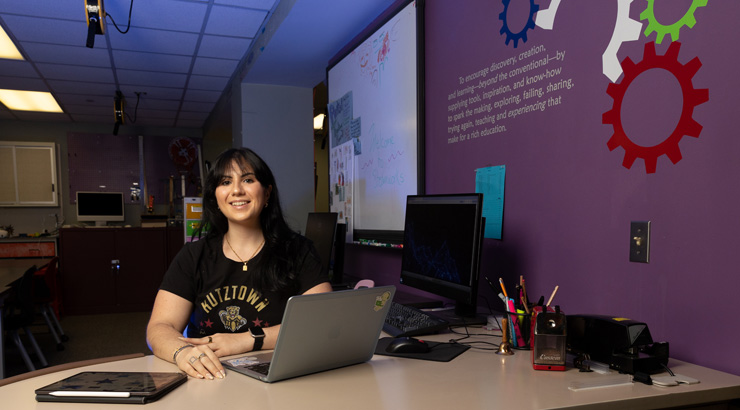

Technology is continuing to evolve, and instructional technology professionals need to stay ahead. The instructional technology faculty at Kutztown are supportive, welcoming, encouraging, and push you to find creative solutions.
Toni ScolaWhy Choose Kutztown for Your M.Ed. in Instructional Technology
Instructional technology is about more than using devices in class. It's about designing effective learning experiences, choosing the right digital tools, and helping learners succeed in every setting, both online and in person. Students build knowledge and skills in technology integration, digital-age learning environments, professional learning, digital citizenship, assessment, differentiation, and engaging instruction.
The M.Ed. in Instructional Technology: Digital Classroom Technology at Kutztown helps students build skills in digital learning, instructional design, online instruction, technology integration, and learning support. These skills are in high demand across education and other training-focused settings, making the degree a strong choice for students who want to strengthen their current practice while expanding future career opportunities.
Why Our Students Choose Kutztown:
- Earn one of Pennsylvania's most affordable instructional technology degrees
- Expert faculty who support you as you work towards your professional goals
- An online learning environment designed to build peer-to-peer connections
- Graduates finish the program with an extensive professional network

Take the Next Steps
- Submit a graduate program application and provide:
- Official transcripts from all previous institutions
- Three letters of recommendation
- Copy of active PA teaching certification
- Due dates by semester of enrollment:
- Fall enrollment: August 1
- Spring enrollment: December 1
- Summer enrollment: May 1
For more information about our instructional technology programs, please contact the coordinator, Dr. Robson Araujo-Junior, at junior@kutztown.edu.
Master's in Instructional Technology Frequently Asked Questions
-
What can I do with a Master's in Instructional Technology?
Earning Kutztown's master's in instructional technology supports careers in business, healthcare, government, instructional design firms, consulting firms, and other settings that design and deliver learning experiences.
This degree supports career paths such as:
- E-learning Instructional Designer & Curriculum Developer
- E-learning Consultant
- Performance Improvement Specialist
- Instructional Technologist
- Instructional Systems Designer
- Academic Director
- Instructional Services Technology Specialist
-
Can I earn my master's degree and certification at the same time?
Yes, students working towards their master's degree in instructional technology can also earn their Instructional Technology PK-12 Specialist Certification. Instructional technology credits can be applied towards both the master's degree and certification simultaneously.
Student Learning Outcomes
-
Instructional Technology (M.Ed.)
- Change Agent - Coaches inspire educators and leaders to use technology to create equitable and ongoing access to high-quality learning.
- Connected Learner - Coaches model the ISTE Standards for Students and the ISTE Standards for Educators, and identify ways to improve their coaching practice.
- Collaborator - Coaches establish productive relationships with educators in order to improve instructional practice and learning outcomes.
- Learning Designer - Coaches model and support educators to design learning experiences and environments to meet the needs and interests of all students.
- Professional Learning Facilitator - Coaches plan, provide and evaluate the impact of professional learning for educators and leaders to use technology to advance teaching and learning.
- Data-Driven Decision-Maker - Coaches model and support the use of qualitative and quantitative data to inform their own instruction and professional learning.
- Digital Citizen Advocate - Coaches model digital citizenship and support educators and students in recognizing the responsibilities and opportunities inherent in living in a digital world.