







University Community Response Team
Welcome to the University Community Response Team website. The information on this page is updated frequently. Thank you for visiting.
Purpose
The University Community Response Team is chaired by the Chief Diversity Officer, Mr. Jerry Schearer. Membership on the University Community Response Team consists of faculty, administrative, student, community leaders, and experts on dealing with potentially bias conduct. The purpose of the University Community Response Team is to advise the president of the university on how to respond to potentially bias conduct.
-
Reporting Incidents
Protocol for Reporting Incidents
Online
Individuals can complete the Incident Report form here.
Individuals can report incidents in person at:
When an Individual comes to report an incident, the office will:
- Assess the individual's emotional state and make appropriate referrals if necessary.
- Assist the individual in their completion of the Incident Report.
- Inform the individual that the incident report will be reviewed by a member of the University Community Response Team within 72 hours to determine appropriate next steps and/or course of action.
- Make the individual aware of the campus resources available to assist them.
-
Definitions
Incident: Any act of bigotry, harassment or intimidation directed at an individual or group based on actual or perceived race, color, religion, ethnicity, national origin, sex, age, disability, sexual orientation, gender identity or veteran status, which may be a violation of law, university conduct standard, or policy.
For purposes of this protocol, a reportable incident is any of the following:
Discrimination: An adverse employment or education-related action or decision that is based on or motivated by an individual's race, color, religion, ethnicity, national origin, sex, age, disability, sexual orientation, gender identity or veteran status.
Examples of discrimination may include, but are not limited to:
- Not receiving the grade you deserve because of your membership in a protected class; and
- Not receiving a raise or promotion you deserve because of your membership in a protected class.
Harassment:
Anti-Harassment Policy and Procedure, accessible on the KU Policy Register webpage.
(applies when the individual(s) who engaged in a bias incident is a non-student employee or off-campus vendor)Student Code of Conduct (applies when the individual(s) who engaged in potentially bias conduct is a student)
Examples of harassment may include, but are not limited to:
- Unwanted physical contact; and
- Obscene or harassing telephone calls, e-mails, letters, notes or other forms of communication.
First Amendment Protections:
Please be aware, as an academic community, Kutztown University values the robust exchange of ideas and the expression of free speech, as protected by the First Amendment of the United States Constitution. The ability to engage in academic discourse in an open, honest and respectful manner is what makes Kutztown unique. Just because the expression of an idea or point of view may be offensive or inflammatory to some, it is not necessarily a bias incident.
-
Responding to Incidents
The Chief Diversity Officer (CDO) in consultation with the University Community Response Team (if needed), may respond to reported incidents in the following ways:
-
- Review all incident reports submitted to the University Community Response Team to learn more about what happened and what kind of response may be appropriate.
- Determine what issues the report presents and which campus partners should be involved in the discussion about how best to respond.
- Conduct an impact assessment to help determine response recommendations and actions. Considerations may include but are not limited to:
-
- Which University members and communities are most directly impacted, and what support do they need (e.g., witnesses to the incident, affinity groups, etc.)?
- What other University members may be impacted by, or have a particular interest in this incident report (e.g. faculty, staff, students)
- Are there off-campus constituencies that may be impacted by this incident?
- To what extent could this incident create a rupture in the campus community?
- Is the incident part of a pattern of conduct targeting a particular identity or community?
- Is there any historical or present-day context that should be considered
-
The University Community Response Team then provides recommendations for responses that may include but are not limited to:
-
- Reach out to any directly impacted individual(s) as soon as possible to let them know that the incident report has been received, provide resources for support, and learn more about their preferred response.
- Contact students, groups, or other members of the community who may also be affected by the incident and need assistance or support.
- As appropriate, provide educational information to parties involved in the incident report about the University's commitment to equity, inclusion, academic freedom, and freedom of expression.
- As appropriate, convene the University Community Response Team to determine the need for a campus-wide response or other action steps necessary for maintaining an environment conducive to learning, living, and working.
- Refer the incident report to investigative offices as appropriate, such as Public Safety, Office of Student Conduct, the Dean of Students, Social Equity, and the appropriate Vice President.
- Assist in coordinating opportunities for community dialogue and education as needed (e.g., listening sessions, training, town halls, panels).
- Consider what communications are needed to effectively inform the campus community and impacted groups about incidents and responses.
Reports of incidents that could violate University policy or the law:
The Chief Diversity Officer (CDO), and/or the University Community Response Team, will refer potential violations of University policy or law to the proper University offices and law enforcement agencies. The University Community Response Team does not have an investigatory or disciplinary role.
-
-
Membership
Task Force Members:
Barry Althouse, Police Supervisor
Dr. Lorin B. Arnold, Cabinet
Desiree Aston, Cabinet
Leah
Cassellia , Sr. Director of MSU & Student InvolvementDr. Philip Cavalier, President
Dr. Lisa Frye, Senate President
Dr. Amber Pabon, Asst. Professor Secondary Education
Sylvia Pham, Librarian
Christine Price, Director of LGBTQ+ Resource Center & Women's Center
Dr. Melinda Quinones-Arias, Director of Multicultural Services & Center
TBD, Director of Marketing
Dr. Stephen Rupprecht, Assistant Vice President and Dean of Students
Matt Santos, Cabinet
Jerry Schearer, Senior Assoc. Dean and Chief Diversity Officer
Dr. Jen Schlegel, Faculty
Jonathan Shaw, Assoc. English Professor
Dr. Christian Temchatin, Superintendent of KASD
Dr. Andy Vogel, Chair, English Department
TBD, Chair, Commission on Human Diversity
TBD, SGB President
Bias Protocol Development Team:
Barry Althouse, Police Supervisor
Des Aston, Cabinet
Mike
Demetor , Associate Dean of Students/Student ConductChristine Price, Director of LGBTQ+ Resource Center & Women's Center
Jerry Schearer, Senior Assoc. Dean and Chief Diversity Officer
-
University Response to Current Issues
To review statements more than two years old, please contact the President's Office.
-
Educational Information & Resources
Speech on Campus By the American Civil Liberties Union
Hate Speech is Protected Free Speech, Even on College Campuses By Erwin Chemerinsky
Free Speech on Public College Campuses Overview By David L. Hudson, First Amendment Scholar
Hate Speech & Campus Speech Codes By David L. Hudson Jr., First Amendment Scholar, and Lata Nott, Executive Director, First Amendment Center
Freedom of Speech and the Press
By Geoffrey R. Stone and Eugene Volokh"Congress shall make no law . . . abridging the freedom of speech, or of the press." What does this mean today? Read More
-
Training and Development
Response, Student Activism, and Free Speech Training
The interconnected aspects of Free Speech, Bias Incidents, & Student Activism. This interactive presentation is designed to provide an overview and increase understanding of bias, bias incidents, and student activism and the potential impact it has on college campuses and communities. Further, the presenter will provide participants with guidance on how to manage, respond to, and report bias incidents on campus, as well as, how to provide support to community members who experience bias incidents. To request this training, please contact deanofstudents@kutztown.edu
Courageous Conversations Training Program
This program trains individuals to create spaces on campus where students, staff, and faculty can have open conversations without judgment. The training teaches the principles of having courageous conversations (i.e. non-violent communication) including as it relates to intersectionality (race/ethnicity, gender, sexual orientation, religion, etc.). The learning outcome for this session is for participants to be able to articulate and demonstrate the essential components for having courageous conversations. Contact: Mr. Jerry Schearer, Sr. Associate Dean & Chief Diversity Officer
The Safe Space Program
The Safe Space Program at Kutztown University is designed to provide education and resources to the KU campus and community members in order to keep a safe and nurturing environment, free of discrimination based on sexual orientation, sexual identity, and gender identity. The purpose of this program is to provide an intro-level understanding of issues within the LGBTQ community and how they may affect students here at Kutztown, as well as basic knowledge on how to be an ally to the community.
Green Zone Training
Green Zone/Got Your Six sensitivity awareness training that educates faculty and staff about the student-veteran transition experience so they can become campus advocates. Contact Veterans Services: veterans@kutztown.edu or 610-683-4228.
Multicultural Services Training
The Multicultural Center supports and encourages students to fully participate in college life, and provides guidance and direction to help any student find resources, explore opportunities, and develop or enhance their academic and personal skills. We also provide resources and support to individuals, groups, and organizations seeking to develop multicultural-focused workshops and programs. For more information, click here.
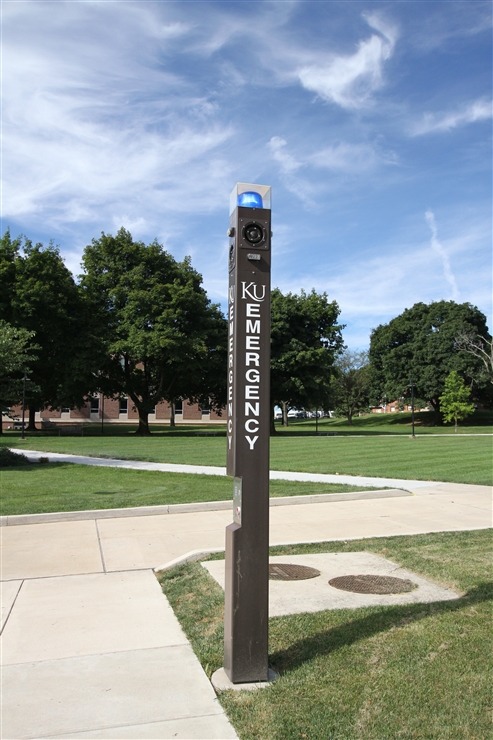
TO REPORT AN EMERGENCY, CALL 610-683-4001
Contact Us:
Contact Multicultural Services