






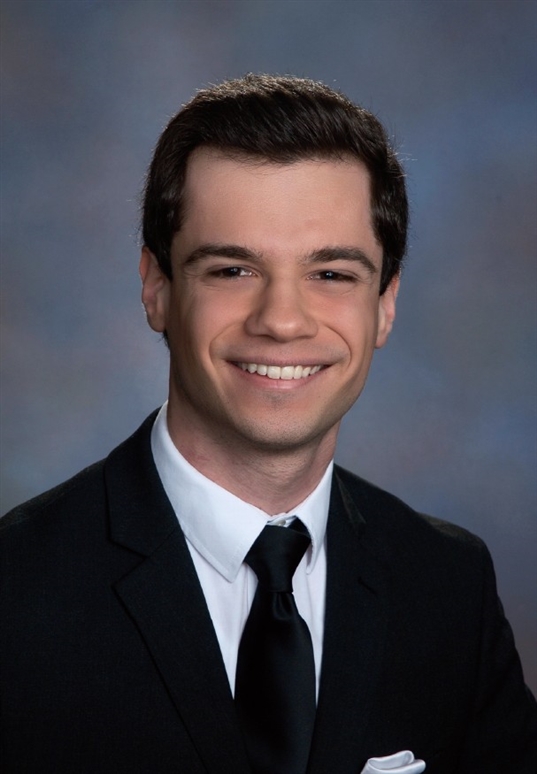
Alumni Story: Isaac Reiter
Ph.D. Student in Graph Theory at Lehigh University; Bethlehem, Pennsylvania
What are you currently doing?
I am a third-year Ph.D. student at Lehigh University, focusing on graph theory. I take advanced graduate courses each semester and recently passed my qualifying exams. I currently teach Calculus as the lead instructor, designing lectures and writing exams while supported by a teaching assistantship that covers tuition and provides a stipend.
How did you get here?
Success in graduate school came from discipline and collaboration. The transition from undergraduate to graduate work can be challenging, but I stayed motivated, made structured study plans, and worked closely with peers. Sharing ideas and solving problems together made the workload manageable and deepened my understanding.
How did KU prepare you?
Kutztown gave me the foundation I needed to thrive in graduate school. The exceptional professors at KU sparked my passion for mathematics and taught me how to learn independently, a critical skill in fast-paced graduate courses. KU also gave me extensive research experience, including multiple publications, which is rare for undergraduates. These valuable experiences gave me confidence and credibility entering my Ph.D. program.
Advice for current students?
- Take as many advanced math classes as possible, both pure and applied.
- Be open-minded: even if you plan to be a professor, skills in statistics, numerical analysis, and programming will expand your options.
- Collaborate with others. You’ll learn more and work more efficiently.
- Persevere through challenges and remember why you love math. Passion sustains you through the hard days.
Trends to focus on?
- Algebra and geometry continue to be leading research areas.
- Learn Python and strengthen your LaTeX and research-writing skills.
- Practice independent problem-solving and teamwork.
- Learn how to manage motivation and balance during the highs and lows of graduate study.
Key Takeaway?
A KU math degree builds resilience, curiosity, and independence, which are the tools needed to succeed in advanced mathematics and beyond.